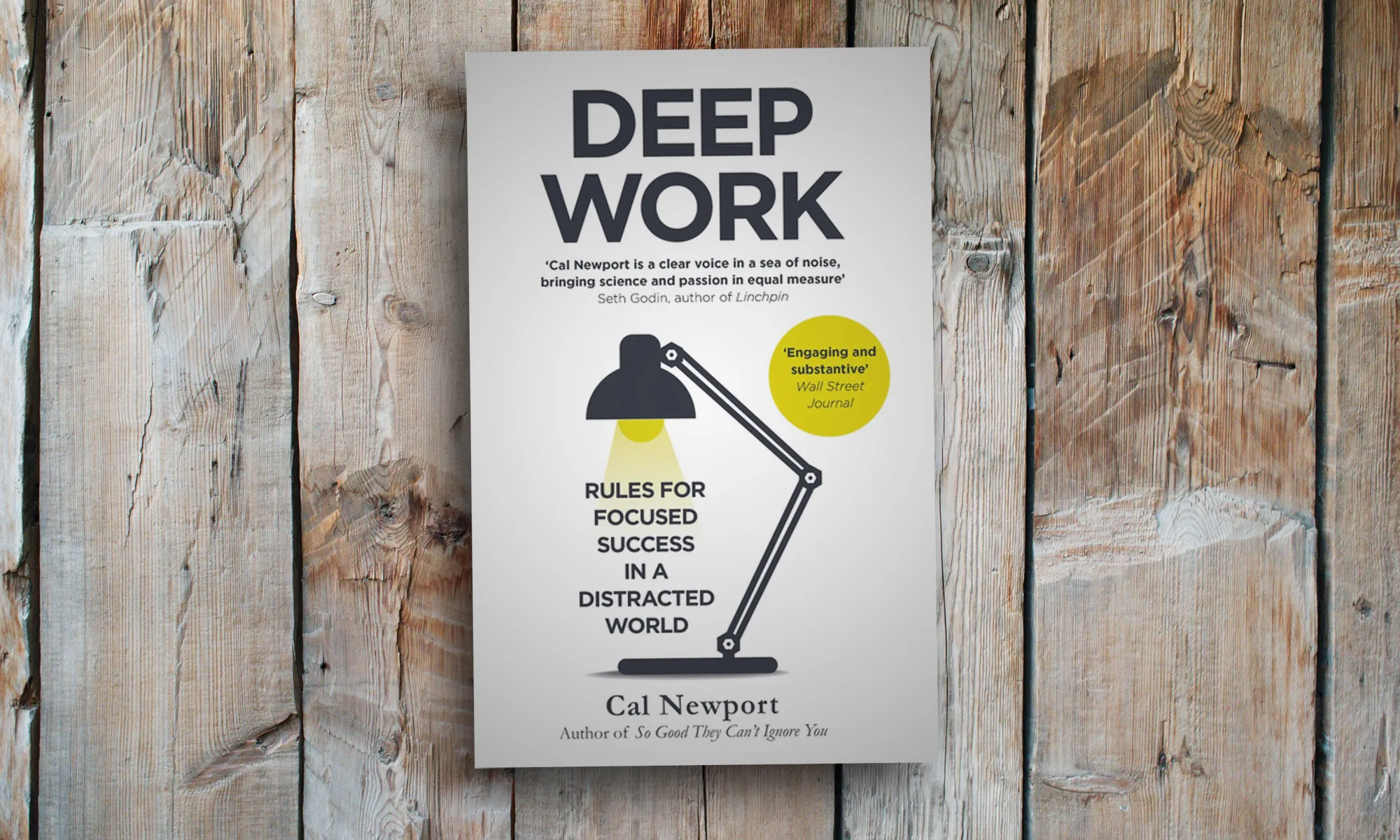
About five years ago, I read Deep Work by Cal Newport for the first time. The main idea was pretty straightforward: being able to focus, without interruption, on something cognitively demanding is becoming rare, and therefore valuable. I found the idea genuinely useful.
Like many people who discover a productivity philosophy, I turned it into a minor personal science project. Time blocking. Notifications off. Phone in another room. Different music, different environments, different times of day. Pomodoro. No Pomodoro. The bottom line was to lock in and get sh*t done.
The goal was one continuous thread of concentration. These days, a productive session often looks rather different. I may have one coding agent investigating a bug, another implementing a feature, and a third reading an unfamiliar part of a codebase. Each has its own terminal and its own chance of doing something surprisingly good or surprisingly weird.
Thinking in goals
I have started thinking less in terms of isolated tasks and more in terms of a few goals I want to move forward. On a given day that could include an AI project or work-related task, an unfamiliar technology I want to understand, a trip I need to plan, and adding an automation to my side-hustle.
Several of them can be active without all of them demanding my attention at the same moment. Keeping a small set of goals in mind feels manageable. Following every update from every terminal does not.
It helps when I can connect the projects to a loose idea of what I want from the day. They do not have to belong to the same area of my life. They only need to form a set small enough that I remember why I started each one and what progress would look like.
A short burst of focus
Before I send an LLM off, I spend some uninterrupted time with the problem myself. I try to get clear on the outcome, the constraints, and the context it will need. This often results in a fairly elaborate prompt.
The prompt matters later as well. If the agent understands the larger goal, I can steer it without explaining the whole project again every time. The initial thinking may only take a few minutes, though it still requires the sort of concentration I used to associate with a much longer working session.
I also tend to babysit the beginning. I watch how the agent interprets the request, where it starts looking, and whether its first decisions make sense. An early misunderstanding rarely fixes itself; it usually grows into a larger one.
At some point I get the sense that it is on its way. It has enough context, the direction looks sensible, and it should be fine for ten or fifteen minutes. Sometimes much longer. That is when I return to something else, often a project I started earlier that is now ready for review.
Issues as a thinking queue
A variation I increasingly like is to move the handoff out of the terminal and into GitHub Issues. It looks a lot like a traditional software-engineering workflow: open an issue for a piece of work, give it enough context, and let the implementation follow from there. The difference is that the next assignee may be an agent.
Writing the issue becomes the deep-thinking part. I describe the problem, why it matters, the relevant parts of the codebase or project, constraints, edge cases, and what a good result should look like. Links to earlier decisions, examples, and explicit acceptance criteria all help. Writing it down as a GitHub issue also forces me to think deeply about the problem at hand.
The agent can then investigate and implement against that brief while the issue preserves the reasoning behind the work. Commits, discussion, checks, and eventually a pull request create a trace from the original problem to the proposed solution. When I return, I am reviewing an artifact with history rather than reconstructing what happened from a terminal transcript.
Meanwhile, I can focus on describing the next issue in the same repository, or move to a completely different one. This separates thinking from execution without making the thinking disposable. It also reduces the urge to watch every line of output: the unit of work is the issue, not the terminal session.
What gets offloaded
The LLM takes over a large part of the sustained execution. It can trace a bug, read documentation, compare approaches, implement something, and run checks while I am elsewhere. I still have to decide what the problem is, give it direction, notice when it has misunderstood, and judge the result.
My periods of concentration have become shorter and more frequent. I use them to understand and frame a problem well enough that someone/thing can continue without me. Then I come back when judgment is needed again.
Five terminals are still five terminals
Switching still costs something. Moving from a bug to cleaning up my inbox, or from one codebase to another, means loading a different set of details into my head. With too much in flight, the terminals become open loops competing for attention.
I felt this fairly quickly when I began using agents in parallel. It is easy to replace checking Slack with checking terminal output and call it productivity. Every new line creates a reason to peek, and every peek makes it a little harder to remember what I was doing elsewhere.
So I try to wait until an agent has a good stretch of independent work ahead of it before switching. I also keep the overall set of goals small. The point is to give each problem a proper thinking pass and let the agent carry it forward, rather than bounce between terminals all day.
On a good day, several projects move forward and I have thought seriously about each of them. They stay connected by the broader goals I chose for the day, which makes the switching feel less random.
This has changed what deep work looks like for me. More of my attention now goes into understanding a problem well enough to set it in motion. The agent handles much of what happens next. I return to make decisions, correct the direction, or fit the result back into the larger project.
I have come to think of this as deep thinking rather than deep work. The focus comes in bursts, and the difficult part is knowing when I have thought enough to hand the problem over, and when I should stay with it a little longer.